
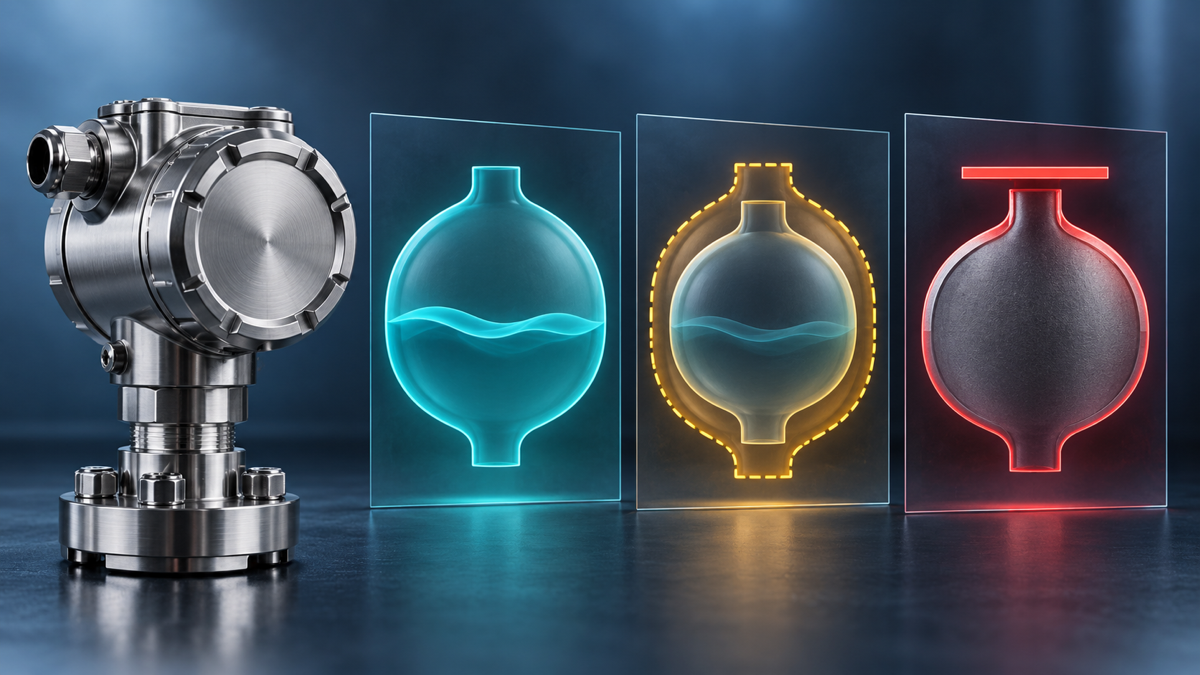
A higher pressure figure is not a broader operating permission. Thermal oil instrument procurement should distinguish measuring range, maximum working pressure, overpressure limit and any separately advertised “burst pressure”. Selecting the largest number does not establish an operating margin.
WIKA S-20 documents are used here as a reading example, not as a recommendation or qualification for a particular thermal oil installation. Burst definitions, event durations and repeated-event conditions not established by the reviewed material remain open questions.
Record Measuring range, Maximum working pressure and Overpressure limit separately, with units, pressure basis, configuration and revision. Page 4 of PE 81.61, dated 02/2026, links the S-20 maximum working pressure to the upper measuring-range value and prohibits permanent operation above it.[1] This is a statement for the documented model, not a universal definition for every instrument.
The series name alone does not identify all options. Page 19 of the operating instructions says that specifications may vary with the selected version and that order documentation is definitive.[2] Link the catalogue to the actual delivered configuration.
The data sheet states that the limit depends on measuring range and may be restricted by process connection and seal. Page 11 of the instructions prohibits permanent operation in the overload range and exceeding the overpressure limit at any time.[1][2] Neither statement permits arbitrary short-term excursions or establishes a duration in seconds or a repetition count.
Service-life load cycles are not automatically permission for repeated overpressure. Without cycle amplitude, temperature and an explicit relationship to overpressure duty, do not derive event limits from a life figure or multiplier. Request duration, frequency and post-event performance requirements separately.
Data-sheet pages 6 and 8–12 address seals, electrical connections, medium temperature and ambient temperature. Options can impose additional restrictions; versions with a cooling element also involve a relationship between medium and ambient temperatures.[1]
A catalogue maximum is not available simultaneously with every option. Medium and ambient temperature are different conditions. Ask the supplier to map the actual fluid, duty, process connection, seal, electrical accessories and version to the order. A seal-material name alone does not establish compatibility with every thermal oil.
This article does not reproduce maximum temperatures, pressure multipliers or derating equations as project selection values. The supplier must confirm boundaries for the precise configuration and application.
The reviewed S-20 material supplies working-pressure and overpressure statements, but no burst-pressure definition or value suitable for citation was established in this review. If other sales material uses “burst” or “destruction”, obtain its original report, model and conditions; do not rename the overpressure limit.
An unavailable public value does not prove that no value or design verification exists. It means that the statement cannot support the present assessment. For separately supplied evidence, identify test object, configuration, temperature, loading conditions, criterion and issued revision.
Another document containing a larger number does not override explicit operating restrictions. Request a manufacturer explanation of how the statements relate. Do not treat a destructive evaluation as emergency operating space or seek a failure point in the field. Continued display is not a test of operating permission.
Page 6 says that process-connection overpressure figures provide only rough orientation and depend on temperature, seal, selected torque, mating-thread type and material, and prevailing conditions; application details need separate examination.[1] One sensing-element or connection figure therefore does not describe the whole installed combination.
Map evidence for the sensing element, instrument body, process connection/seal, external accessories and project interface separately. Ask how a component report covers the delivered instrument; a complete-instrument document also does not automatically include every external accessory.
Wetted, sealing and case materials serve different roles. “Stainless steel” or “high-temperature seal” is not a complete identification. Do not apply a hose multiplier to an instrument or replace its restriction with a higher-rated fitting figure. For interface identity, see the thread and sealing-location checklist.
The fault tables on pages 15–16 identify mechanical overload from overpressure as a possible cause of certain output faults and specify replacement, with manufacturer contact for repeated failures, for the relevant cases.[2] This does not mean every output fault is overpressure, nor that every overloaded instrument automatically recovers its accuracy.
Record instrument identity, event time, known pressure and temperature, output behaviour and record sources. Mark unknown peaks, durations and event counts as unknown rather than converting retrospective estimates into facts.
Continued use, inspection or replacement must follow applicable instructions and approved procedures. This article authorises no disassembly, bypass or live-pressure work. A manufacturer's case assessment should identify the specific instrument, event and configuration rather than being extended to a whole batch.
Keep “enquiry raised”, “reply received” and “assessment completed” distinct. An offer to assess is not a passed assessment. Calibration evidence also needs an identified object, date and relationship to the post-event condition.
This is an editorial evidence framework, not a new product standard. Begin with tag and order configuration, and add document locations, evidence owners, revisions and confirmation dates.
| Review item | Evidence to retain | Unsupported inference to avoid |
|---|---|---|
| Identity and range | Tag, order revision, configuration, range, units and pressure basis | The same series means the same supplied version |
| Working and overpressure | Original terms, applicable object and connection/seal restrictions | Overpressure extends the operating range |
| Hot-service conditions | Medium/ambient conditions and seal/electrical option mapping | A catalogue maximum covers every option |
| Burst statement | Original source, test object, conditions and criterion; label missing evidence | Overpressure can be renamed burst or operating permission |
| Event boundaries | Explicit duration, repetition and post-event performance basis | Life cycles mean repeated-overpressure cycles |
| Post-event assessment | Event records, supplier reply, assessed object and conclusion scope | Display recovery means performance verification passed |
A supplier enquiry can read: “For this order, please confirm maximum working pressure and overpressure limit, including connection, seal and thermal restrictions. Supply the original source and applicable object for any separate burst statement. Identify covered event conditions, post-event assessment documents and responsibility for complete-instrument and project conformity.”
Retain known source locations alongside missing conditions. Blank does not mean zero, and “not applicable” should not disguise an unanswered question. For fill-fluid, response and temperature issues, see the remote diaphragm-seal system checklist; that review is separate from pressure-boundary acceptance.
The useful procurement question is not which number is highest, but how terms, configuration, thermal conditions and event boundaries connect to one order. Documenting the source, scope and unresolved conditions is more reliable than a general statement that “safety margin is sufficient”.
[1] WIKA, S-20 data sheet PE 81.61, 02/2026, 18 pages. Principal reviewed locations: pages 4, 6 and 8–12, pressure terms, process connection and thermal conditions.
[2] WIKA, Pressure transmitter, model S-20 operating instructions, 14043170.09, 04/2026. English pages 11, 15–16 and 19–20 reviewed; no claim that all 116 multilingual pages were audited. Short quotation: “Do not exceed the overpressure limit at any time.”
Linked PDFs accessed 27 October 2026. Printed revisions do not establish that they are the latest. The example does not qualify any S-20 configuration for a particular thermal oil duty. No pressure multiplier, derating formula, operating procedure, invented burst value, event duration, cycle condition or post-event performance guarantee is provided.